

Why Acetypol™ 15–20% Acemannan Is Redefining Aloe Performance

Acetypol™ 15–20% Acemannan: HighDA, HighPurity Aloe Glucomannan vs Typical Aloe Gels and Juices
Synopsis:
Acetypol™ provides a standardized Aloe glucomannan fraction in which acemannan is enriched to 15–20% with a high degree of O-acetylation and a controlled, mid-range molecular weight profile, yielding a mannose-dominant, structurally well-defined polymer that supports consistent bioactivity in vivo and in vitro (Liu, 2019; Campestrini, 2013; Comas-Serra, 2023). In contrast, most commercial Aloe gels and beverages contain lower, highly variable acemannan levels, show substantial deacetylation and chain degradation after processing, and are diluted with non-glucomannan carbohydrates, leading to weaker and less predictable structure–activity relationships (Minjares-Fuentes, 2016; Comas-Serra, 2023; Rodríguez-Rodríguez, 2020).
Keywords: AV, biomaterials, regenerative medicine, foreign body response, macromolecules, anti-inflammatory material, bioink, tissue engineering.
By specifying a 15–20% acetylated acemannan content, Acetypol™ aligns with the acemannan-centered definition of authentic Aloe polysaccharides and allows the degree of acetylation, mannose:glucose:galactose ratio, and molecular weight distribution to be set as explicit quality attributes rather than uncontrolled variables (Jales, 2021; IASC, 2022). This high-DA, mannose-rich glucomannan matrix preserves the rheological and gel-forming behavior associated with intact acemannan, which has been linked to superior viscoelastic properties and improved stability compared with crude gel extracts that have lost acetyl groups during heating or drying (Campestrini, 2013; Minjares-Fuentes, 2016). Quantitative ¹H NMR and complementary carbohydrate analyses used in modern Aloe analytics further support the use of such high-purity acemannan fractions as reproducible actives, in contrast to typical juices where DA frequently falls below 35% and, in many flavored products, the polymer can be fully deacetylated (Comas-Serra, 2023; Process NMR Associates, 2014).
Taken together, Acetypol™ functions as a structurally optimized, high-DA Aloe glucomannan that overcomes the low-acemannan, low-DA, and compositionally noisy profiles of conventional gels and juices, providing formulators with a more predictable platform for claims targeting prebiotic activity, barrier support, hydration, and immune-related endpoints within the limits of current Aloe science (Quezada, 2017; Liu, 2019; Comas-Serra, 2023).
Source of validity: Scientific
Acetypol™ 15–20% Acemannan : Controlling Acetylation, Molecular Weight, and Purity
In purified acemannan, O-acetyl groups typically contribute roughly 8–12% of the polysaccharide’s dry weight, a range associated with high water solubility, amorphous chain conformations, and robust biological activity (Chokboribal, 2015; Kumar, 2019). When the degree of acetylation is reduced below this range, deacetylation increases crystallinity, decreases hydrophilicity, and leads to a measurable loss of bioactivity in cell and tissue models (Chokboribal, 2015). These structure–function relationships underline why controlling acetylation is critical for reproducible immunomodulatory and tissue-repair effects (Liu, 2019).
By contrast, many commercial Aloe gels and beverages exhibit markedly lower acemannan content and significantly reduced acetylation because of thermal processing, pasteurization, spray-drying, charcoal decolorization, enzymatic degradation, and dilution steps (Femenia, 2003; Rodríguez-Rodríguez, 2020; Comas-Serra, 2023). These treatments often generate a low-DA, partially deacetylated glucomannan profile, in which the native O-acetyl pattern of the Aloe polymannose is largely lost and the remaining polymer displays diminished functional properties (Comas-Serra, 2023). Analyses of commercial Aloe beverages confirm that acemannan, when present, is frequently both low in concentration and almost completely deacetylated, with DA values below 35% and, in many flavored drinks, acemannan levels under 20 mg per 100 g (Comas-Serra, 2023).
A standardized acemannan fraction formulated at 15–20% acetyl content indicates a substantially higher degree of acetylation than is usually observed in “typical” commercial Aloe juices, and it approaches or exceeds an average of 1–1.5 acetyl groups per mannose residue, a configuration that preserves amorphous, hydrated chain conformations and receptor recognition by pattern-recognition receptors such as TLR4 (Rivas-Morales, 2016; Kumar, 2019; Liu, 2019). Over-acetylated or optimally acetylated acemannan preparations have been shown to display enhanced viscosity, improved thermal stability, stronger free-radical scavenging, and more pronounced immunomodulatory and radioprotective effects compared with deacetylated analogues (Kumar, 2019). In practical terms, maintaining this higher acetylation window supports macrophage activation, cytokine induction, and tissue-repair pathways that are not fully replicated when the polymer is heavily deacetylated (Liu, 2019).
An Acetypol™-type fraction enriched in O-acetylated mannose units relative to total sugars therefore indicates that acemannan is not merely present but chemically optimized, rather than “washed out” or structurally degraded by harsh processing (Alonso, 2012; Rodríguez-Rodríguez, 2020). By specifying a 15–20% acetyl content range alongside defined molecular weight and purity parameters, such a material aligns more closely with the native, high-DA polymannose profile associated with prebiotic, immunomodulatory, and tissue-supportive activities reported for Aloe vera acemannan (Quezada, 2017; Comas-Serra, 2023).
How HighDA Acemannan Outperforms Typical Aloe Vera Gels and Juices
High-degree-of-acetylation (high-DA) acemannan preparations preserve a narrow, high-molecular-weight glucomannan fraction with intact acetylation, whereas typical Aloe vera gels and juices contain a broad, partially degraded polysaccharide mixture with reduced bioactivity.
How native Acemannan occurs in Aloe gel
IIn fresh inner leaf parenchyma, acemannan is a β-(1→4)-linked acetylated polymannan that can reach mean molecular weights on the order of 1,000–1,600 kDa, sometimes extending into the low-million-Da range depending on cultivar and analytical method (Liu et al., 2019; Bai et al., 2023).
Within native gel, this glucomannan coexists with other soluble and cell-wall polysaccharides, so commercial “Aloe gel” typically presents a broad molecular-weight distribution rather than a single, well-defined acemannan peak (Liu et al., 2019).
Impact of processing on molecular weight and structure
Common industrial steps such as pasteurization, concentration, drying, and long-term storage expose Aloe matrices to heat, shear, and occasionally non-physiological pH, which accelerate β-(1→4)-link scission and de-acetylation of acemannan (Minjares-Fuentes et al., 2017; Minjares-Fuentes et al., 2020).
These conditions drive a shift from high-molecular-weight chains toward lower-molecular-weight fragments (for example, from tens–hundreds of kDa down to a few tens of kDa in dried powders) and reduce overall acemannan yield by roughly 40% in some drying scenarios (Minjares-Fuentes et al., 2017).
Why high‑DA, high‑MW Acemannan performs better
A growing body of structure–function work indicates that polysaccharide bioactivity depends strongly on molecular weight, degree of branching, and degree of acetylation (Bai et al., 2023).
For acemannan, higher molecular weight and preserved O-acetyl groups correlate with more pronounced viscoelastic behavior in solution and with enhanced interaction with immune and wound-healing targets, which are typically reduced when the polymer is extensively depolymerized or de-acetylated (Bai et al., 2023; Liu et al., 2019).
Positioning of high‑DA Acemannan vs. typical gels/juices
In contrast to commodity Aloe gels and juices—where acemannan represents only a modest fraction of solids and is often partially degraded—high-DA acemannan ingredients are manufactured to selectively enrich the high-molecular-weight, highly acetylated glucomannan fraction and to minimize processing conditions that trigger depolymerization (Liu et al., 2019; Bai et al., 2023).
As a result, high-DA acemannan can deliver a more consistent rheological profile and a better-preserved structural signature that underpins reported immunomodulatory and barrier-supportive effects, offering functional advantages over typical Aloe vera gels and juices that contain more heterogeneous, lower-molecular-weight polysaccharide fragments (Bai et al., 2023).
Degree of Acetylation as a Structural and Functional Control Knob
Degree of acetylation in acemannan acts as a structural and functional control parameter that must be managed together with molecular weight distribution during extraction and downstream processing. To preserve both acetylation and a defined molecular weight window, process conditions are usually constrained to mild temperatures (typically below 60–65 °C), controlled near-neutral pH, short residence times, and limited exposure to glycosidases, since excessive heat or harsh pH accelerate deacetylation and random depolymerization of the glucomannan backbone. Under these controlled conditions, Aloe gel polysaccharides retain a high-molecular-weight acemannan population (often above 1000 kDa) with a smaller, deliberately generated low-molecular-weight fraction (below 100 kDa), which is increasingly associated with enhanced biological activity and bioavailability. In contrast, generic Aloe juices or poorly controlled concentrates frequently show marked loss of acetyl groups and a shift toward lower, highly polydisperse molecular weight species as a consequence of heating above 60 °C and aggressive processing, changes that correlate with reduced functional performance in vivo.
When characterized by SEC-HPLC or HPGPC, well-defined acemannan ingredients typically display one dominant, relatively narrow high-molecular-weight peak (with a controlled satellite low-molecular-weight shoulder), reflecting tighter control of chain length and less random degradation along the process. In contrast, many commodity Aloe preparations present broad, multimodal chromatograms characteristic of heterogeneous, partially degraded polysaccharide populations that have undergone variable deacetylation and backbone cleavage. This structural divergence is consistent with quantitative data showing that standardized Aloe extracts and purified acemannan can reach ≥5% and up to about 10–20% acemannan on a dry-matter basis, whereas unstandardized Aloe juices may contain only a few percent acemannan, sometimes near or below the 4–5% range typical of minimally specified Aloe materials. Together, these observations support treating the degree of acetylation and molecular-weight profile as coupled quality attributes and practical “control knobs” for designing Aloe-based ingredients with predictable, reproducible bioactivity.
Purity: Acemannan vs. total Aloe polysaccharides
Typical retail Aloe vera juices and gels contain a heterogeneous mix of polysaccharides with relatively low, often poorly standardized, acemannan content, whereas a 15–20% acetylated acemannan ingredient reflects targeted purification, defined sugar ratios, and NMR/FTIR-verified identity.
Acetypol redefines efficacy by achieving up to 25% concentration measured by O-acetyl, significantly outperforming traditional Aloe vera gel powder 200:1.

Purity gap: Aloe juice vs. Acemannan ingredient
Typical Aloe vera beverages and gels contain a complex mixture of polysaccharides (including pectins, hemicelluloses, arabinans, galactans, small fructans), residual proteins, phenolic compounds, and variable amounts of cellulose and other biopolymers. In these products, acemannan is usually a minor component of the total carbohydrate fraction, and in many commercial materials the effective acemannan content is well below 10% of total solids once deacetylation and degradation are taken into account.
Systematic evaluations of commercial Aloe beverages show large variability in true acemannan content, with many flavored products (30–77% Aloe vera on label) containing less than 30 mg acemannan per 100 g and often being almost fully deacetylated despite prominent Aloe claims on the front of pack. Even among unflavored beverages labeled as ≥99% Aloe vera, only a subset provide more than about 160 mg acemannan per 100 g, underscoring that labeled Aloe percentage does not reliably predict the delivered dose of structurally intact acemannan per serving.
What 15–20% acetylated Acemannan implies
By contrast, a purified ingredient standardized to 15–20% acemannan (on a dry-weight basis) generally implies that the Aloe matrix has been enriched for the β-(1→4) O-acetylated glucomannan fraction using upstream fractionation steps such as ethanol precipitation, membrane/ultrafiltration, and, in some cases, ion-exchange or adsorption chromatography. These operations preferentially retain high-molecular-weight, mannose-rich chains and remove much of the low-molecular-weight sugars, unrelated polysaccharides, and phenolic impurities that dominate in crude juices and gels.
Well-characterized acemannan ingredients also report defined monosaccharide composition—typically ≥70–80% mannose with minor glucose and galactose—together with a preserved O-acetyl pattern that can be confirmed by ¹H/¹³C-NMR and FTIR, and these structural signatures are often used as release criteria for both identity and minimum degree of acetylation. In practice, this means that a “15–20% acetyl acemannan” Aloe polysaccharide grade is not just richer in acemannan by weight than standard Aloe juice, but is also structurally controlled (mannose dominance, acetylation profile) in ways that are directly linked to its expected bioactivity and to modern quality-attribute specifications for acemannan-based ingredients.
How 15–20% acetyl content becomes a control knob
Structurally
Higher acetyl substitution along the mannose backbone disrupts inter‑chain hydrogen bonding, which keeps acemannan chains more flexible, more soluble, and less prone to collapse into partially crystalline domains (Chokboribal et al., 2015; Liu et al., 2019; Bai et al., 2023). This acetyl‑stabilized, hydrated conformation favors the formation of viscoelastic gels and continuous films, properties that are important for oral, dermal, and scaffold biomaterial applications where controlled hydration and mechanical support are needed (Simões et al., 2012; Bai et al., 2023). In parallel, preserving an optimal acetyl density maintains a more open, accessible chain topology that facilitates recognition by pattern‑recognition receptors on immune cells, which has been linked to enhanced immunostimulatory activity of acetyl‑rich plant polysaccharides (Liu et al., 2019; Bai et al., 2023).
Functionally (versus typical Aloe polysaccharides)
Complete or extensive deacetylation of acemannan reduces its water solubility, drives partial crystallization, and leads to a marked loss of biological activity, including diminished induction of cell proliferation and VEGF and type I collagen expression (Chokboribal et al., 2015; Liu et al., 2019). In contrast, fully or highly acetylated acemannan stimulates gingival fibroblast proliferation and up‑regulates keratinocyte growth factor‑1, VEGF, and type I collagen, accelerating oral wound closure in vitro and in vivo (Jettanacheawchankit et al., 2009). Deacetylated or low‑DA Aloe glucomannans and mixed Aloe polysaccharide fractions consistently show weaker effects on fibroblast proliferation, angiogenic signaling, and matrix production than purified, high‑DA acemannan (Jettanacheawchankit et al., 2009; Chokboribal et al., 2015; Comas‑Serra et al., 2018/2019, as cited in Miro León, 2019).
A high‑DA, high‑purity acemannan fraction therefore offers a tighter, more predictable structure–activity relationship than crude Aloe gels or juices, where the target glucomannan is diluted by other wall polysaccharides and frequently degraded or deacetylated during processing (Sierra‑García et al., 2014; Liu et al., 2019; Bai et al., 2023). Studies comparing different extraction and drying conditions show that improper processing can significantly lower the degree of acetylation and reduce acemannan’s bioactivity, underscoring DA as a critical quality attribute (Comas‑Serra et al., 2018/2019, as cited in Miro León, 2019; Kwon et al., 2023).
Implications for formulation and quality control
In practice, formulating with a standardized acemannan that maintains a defined DA window (e.g., ~15–20% acetyl content by mass, corresponding to a high but not maximal substitution level) allows developers to set DA, molecular weight range, and mannose-rich purity as explicit, testable quality attributes for both functional foods and biomaterials (Sierra-García et al., 2014; Bai et al., 2023). This approach contrasts with unstandardized Aloe vera gels or juices, in which acemannan content, DA, and molecular weight are highly variable across cultivars, products, and processing methods, making it difficult to ensure consistent immunomodulatory, wound-healing, or rheological performance from batch to batch (Quezada et al., 2017; Liu et al., 2019).
By deliberately targeting and controlling a 15–20% acetyl content in a purified acemannan fraction, formulators can effectively “dial in” a balance of chain flexibility, solubility, gel/film formation, and receptor-level engagement, turning DA into a practical design parameter rather than an uncontrolled artifact of Aloe processing (Chokboribal et al., 2015; Bai et al., 2023).

AMB WELLNESS has developed a proprietary with a unique process isolating Acemannan from Aloe Vera Inner Gel with a high content of Acemannan ranging from 10% up to 25% measured by Nuclear Magnetic Resonance (NMR). Designed for high-end cosmetics, healthcare, and nutraceutical applications, Acetypol™ redefines efficacy, supporting skin hydration, barrier function, immune modulation, and gut health, positioning AMB WELLNESS at the forefront of innovation where scientific precision, purity, and performance meet unmatched effectiveness.Acetypol™ offers a more reliable and scientifically controlled alternative to conventional Aloe products, enabling formulators to achieve reproducible results by treating acetylation, purity, and molecular weight as key quality parameters rather than variable outcomes of processing.Acetypol™ offers a more reliable and scientifically controlled alternative to conventional Aloe products, enabling formulators to achieve reproducible results by treating acetylation, purity, and molecular weight as key quality parameters rather than variable outcomes of processing.Acetypol™ is a highly standardized Aloe vera–derived ingredient enriched to 15–20% acemannan with a high degree of acetylation (DA), controlled molecular weight, and high purity.
Share it on:
Latest News

Aloe Vera FAQS
Looking to elevate your products with high-quality organic ingredients? Check out our FAQ section to get all your burning questions answered about incorporating Aloe Vera gel concentrates, spray-dried powders, and various aloe-based formulations into your cosmeceuticals, personal care, dietary supplements, and nutraceuticals. Discover the benefits of using certified organic ingredients for sustainable, effective, and natural raw materials that cater to eco-conscious consumers in the health, beauty, and wellness industries.
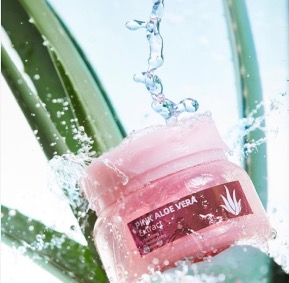
Aloe Vera Pink
Pink Aloe Vera Gel is extracted from the usual Green Aloe Vera, focusing on helping stress skin damage, hyperpigmentation, whitening, and moisturizing products. It comes with an assortment of goodness such as vitamins, antioxidants, and other components such as polysaccharides, tannins, phenols, flavonoids, and sterols that are helpful for the skin, and rich in hydration.

Hair Care with Aloe
Aloe extracts, such as aloe vera juice and gel, deliver vitamins C & E, antioxidants, and hydrate the skin, enhancing it elasticity with regular application. As a natural moisturizer it brings oxygen to the skin, strengthening it from within. Furthermore, growing consciousness among consumers on personal grooming has led to the development of natural and organic skincare and cosmetic industry, consequently paving the way for the market.